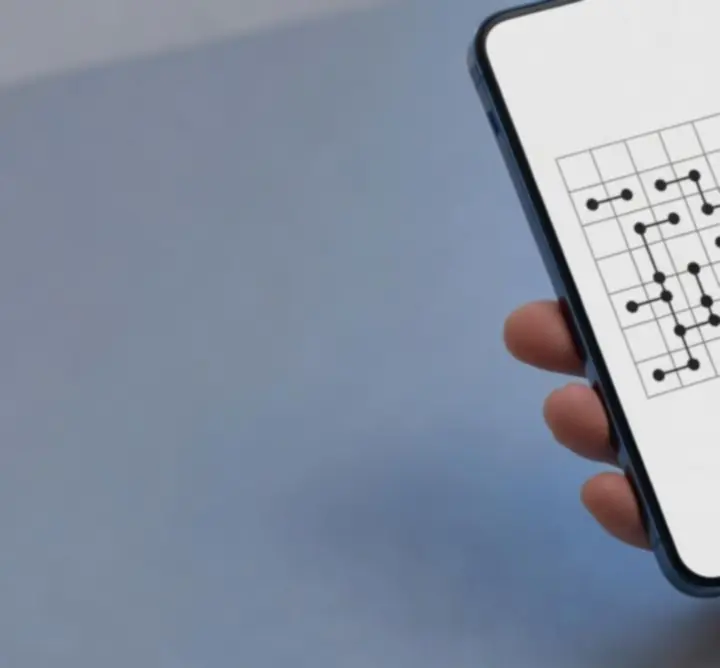
Gameplay that turns logic into a satisfying daily ritual

Logic Grid Puzzles on WASD Építőipari Korlátolt Felelősségű Társaság are built around calm, focused problem-solving. Every puzzle asks you to read structured clues, eliminate impossibilities, and gradually reveal one perfectly consistent solution.

From compact 3×4 introductions to deep 4×7 challenges, the gameplay always stays clean, logical, and ad-free.

Logic grid puzzle interface showing a clean grid and clue panel
A focused view: a structured grid, clear clues, and no distractions.

Gameplay overview

Each Logic Grid Puzzle presents a small world of interconnected facts: people, times, places, items, or events. Your task is to discover how they all fit together using only deductive reasoning—no guessing, timers, or hidden tricks.

You work inside a structured grid that tracks every possibility. As you apply clues, rows and columns gradually resolve from uncertain to certain, creating the satisfying moment when the full solution becomes logically inevitable.

  • Single, logically forced solution for every puzzle
  • No ads, energy systems, or interruptions
  • Progressive difficulty designed to teach, not frustrate

Grid mechanics at a glance

The grid is divided into axes that represent categories—such as names, favorite drinks, or days of the week. Cells in the grid capture relationships between items in those categories.

Tap cells to mark yes, no, or unknown. The grid becomes a visual record of your reasoning.

How to play a logic grid puzzle

Solving a puzzle is a structured, repeatable process. Instead of trial and error, you move through a clear sequence of reading, marking, and refining.

  1. 1. Read the overview and entities

    Start with the short story or scenario. Identify the core categories (for example, four friends, their desserts, and the day they visited a café).

  2. 2. Scan all clues once

    Read through the full list of clues without marking anything yet. This gives you a sense of what information is absolute, relative, or comparative.

  3. 3. Mark direct facts

    Apply clues like “Ava ordered tea” directly on the grid: place a yes in the matching cell, and no in all conflicting cells in that row and column.

  4. 4. Use indirect relationships

    For clues like “The person who ordered coffee came after Liam,” mark exclusions that violate the order, then search the grid for where the remaining possibilities can fit.

  5. 5. Cross-reference & propagate

    Every new yes forces a chain of no marks in the same row and column. Keep revisiting earlier clues to see what else they now imply.

  6. 6. Confirm the final arrangement

    When each entity has exactly one match in every category, and no clue is violated, the puzzle is complete.

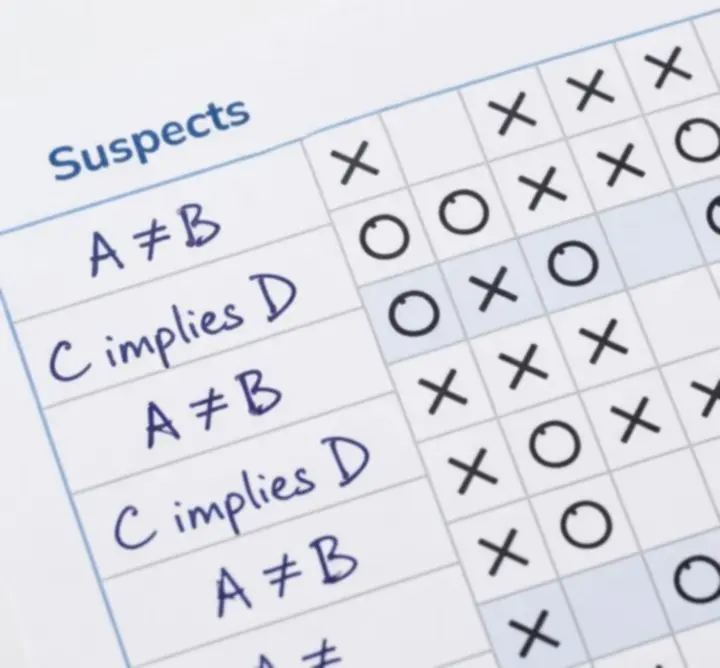
Close-up of the grid interface with selectable cells and clear clue text
The interface guides you through reading clues, marking cells, and refining the grid step by step.

Beginner to expert progression

100 carefully ordered puzzles guide you from first steps to advanced reasoning.

Early puzzles use compact 3×4 grids with only a few entities and straightforward clues. They introduce core ideas like exclusivity (one-to-one matches) and elimination without overwhelming you.

As you progress, grids expand towards 4×7 layouts with more categories, layered relationships, and multi-step inferences. Difficulty increases gradually, so every new concept is learned through practice rather than sudden spikes in complexity.

  • Beginner – small grids, direct clues
  • Intermediate – multiple categories, relative clues
  • Expert – dense 4×7 grids with chained logic
View level structure and progression

Offline, distraction-free gameplay

Your puzzles, always available—no connection required.

All 100 free puzzles are fully playable offline once installed. Progress is stored locally on your device, so you can pick up exactly where you left off on commutes, flights, or quiet breaks.

Without ads, notifications, or countdown timers, the gameplay loop stays simple: open the app, choose a grid, think clearly, and solve at your own pace.

See all gameplay features

Understanding clue types

Learn to recognize how each clue constrains the grid.

Clues fall into a few recurring patterns, each with its own logic signature:

  • Direct clues – “Ava ordered tea.” One positive match, many necessary exclusions.
  • Negative clues – “Liam did not visit on Monday.” A single exclusion that narrows options.
  • Relational clues – “The person who ordered coffee came after Liam.” Constrains order or distance.
  • Comparative clues – “Emma visited earlier than the person who chose cake.” Defines relative positions.

By cross-referencing these clues against the grid, isolated facts combine into a complete, consistent solution.

Smart features that respect your thinking

WASD Építőipari Korlátolt Felelősségű Társaság includes optional helpers that keep you oriented without solving the puzzle for you. Each tool is designed to surface structure, not shortcuts.

  • Autofill exclusivity – Confirming a single match can automatically clear mutually exclusive cells in that row and column.
  • Gentle error checking – Turn on subtle alerts that signal contradictions without revealing the correct answer.
  • Dark mode – A calm, high-contrast palette for low-light sessions.
  • Progress indicators – See how many relationships remain unresolved at a glance.

All helpers are optional—advanced solvers can disable them for a pure, manual experience.

Sample puzzle walkthrough

To illustrate the flow, imagine an introductory puzzle with three friends, three favorite desserts, and three different days of the week.

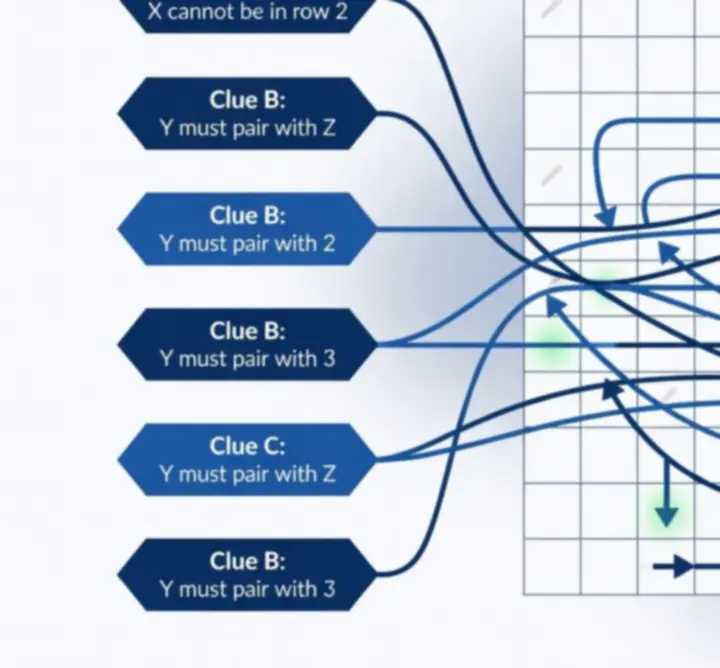
Diagram showing the logical flow from reading clues to a completed grid
A beginner puzzle walkthrough: from raw clues to a single, inevitable arrangement.
  1. Start: You mark a direct match from a clue like “Ava visited on Monday.”
  2. Propagate: Monday is now blocked for all other friends, and Ava is blocked from all other days.
  3. Combine: A comparative clue like “The person who chose cake came after Monday” removes cake from Monday’s row.
  4. Resolve: As conflicts accumulate, the remaining open cells narrow to a single valid configuration.

The same logical moves scale smoothly from tiny 3×4 puzzles to rich 4×7 grids.

Brain training benefits

Regularly solving logic grid puzzles has been linked in cognitive research to improvements in deductive reasoning, working memory, and sustained attention. The gameplay naturally exercises these skills:

  • Deductive reasoning – Turning abstract clues into concrete, necessary conclusions.
  • Attention to detail – Tracking small constraints that have large downstream effects.
  • Cognitive flexibility – Revisiting earlier assumptions as new information emerges.
  • Mental organization – Maintaining a clear internal model of the puzzle’s structure.

Because puzzles use discrete steps and visible feedback, they are well-suited for short, focused sessions that add up over time.

Visual clarity and accessibility

The interface is designed to keep cognitive load on the puzzle—not the UI:

  • High-contrast color combinations for key states (yes, no, unknown)
  • Readable system-friendly fonts tuned for small screens
  • Adjustable text size and grid zoom for comfortable viewing
  • Clear focus outlines and large tap targets for accessible interaction

Together, these choices create a calm, legible environment that supports long sessions and players with a wide range of visual preferences.

Tips for mastering advanced grids

As puzzles grow more complex, strategic habits matter as much as raw logic. These approaches help you stay systematic, even inside dense 4×7 challenges.

Start with extremes

Look for clues that mention the “first,” “last,” or “only” instance. These often lock down edges of the grid and create anchors that other clues can snap to.

Mark every consequence

Whenever you place a single yes or no, scan its entire row and column. Many mistakes come from forgetting one implied exclusion or inclusion.

Alternate between clues and grid

Don’t exhaust one clue before re-reading others. The strongest deductions appear when two or three hints interact on the same set of cells.

Try a beginner puzzle Contact us for support